Wood Chipper — Quick Attach for Skid Steer, Track, Wheel & Hydrostatic Loaders
A wood chipper turns brush, hedge trimmings, prunings and storm damage into chip where the material falls, so nothing has to be dragged to a heap and burnt or carted away. The unit hangs on the quick-attach plate of a skid steer loader, compact track loader, wheel loader or hydrostatic wheel loader, and is driven by the carrier’s auxiliary hydraulic circuit rather than an engine of its own — which is why the flow at the couplers matters more than the badge on the bonnet.
How it works
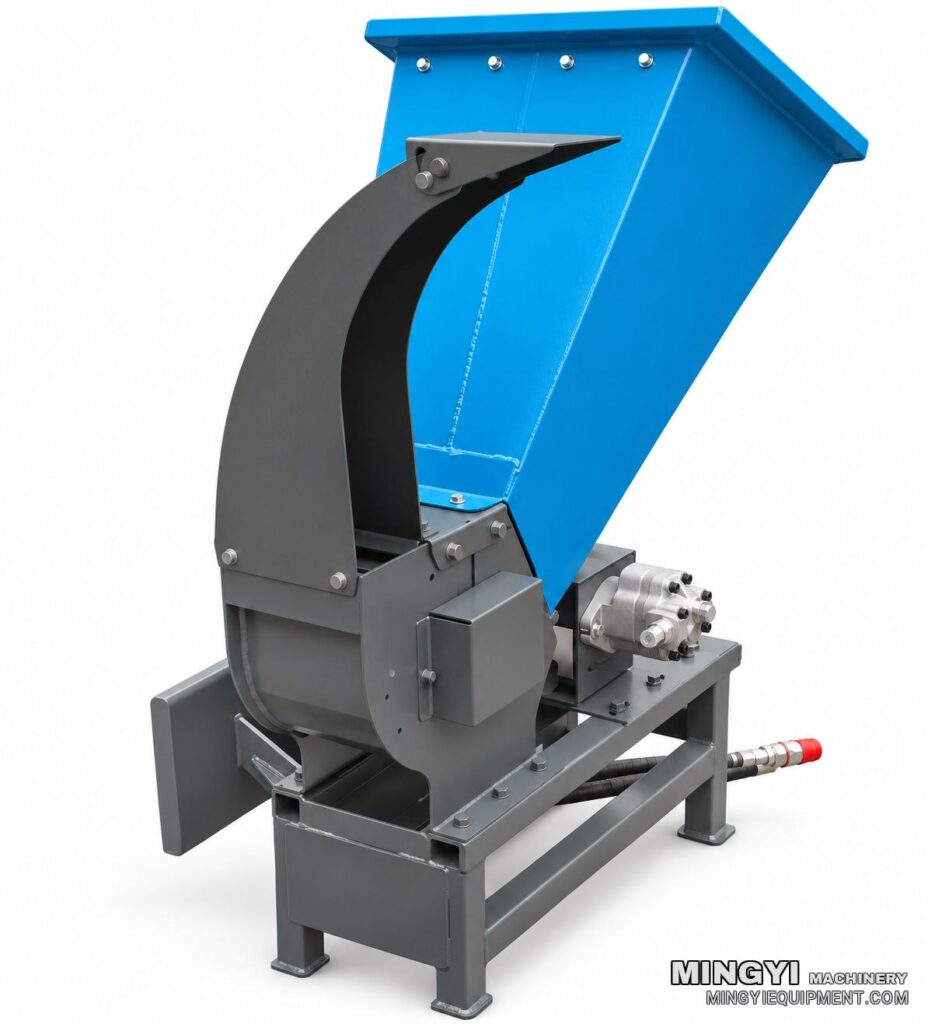
Material goes into a feed hopper and is pulled in by a pair of hydraulic feed rollers against a rotating disc or drum fitted with hardened knives. The knives slice the wood across a fixed anvil bed and the chip is thrown out of a discharge chute, which can be aimed into a trailer, a bunker or straight onto a path. A disc machine gives a cleaner, more uniform chip and handles green material well; a drum machine takes rougher, stringier brush and mixed loads without wrapping as easily. Feed rollers are reversible on most units, so when a block jams the operator backs the material out with the roller control instead of reaching into the hopper. Knives are reversible and replaceable, and the gap between knife and anvil bed is set with a gauge — a blunt set of knives tears the material instead of cutting it and costs more fuel and time than a new set.
Where it works
Hedge and tree surgery waste, storm and windblown clearance, woodland thinning, orchard and vineyard prunings, roadside and fence-line brush, site clearance before building, park and garden maintenance, and chip production for paths, beds, biomass and compost. The list below runs from the jobs it is bought for to the occasional ones.
Compatibility
The chipper mounts on the standard quick-attach plate used by skid steer loaders, compact track loaders and wheel loaders, and the MY130S, MY180S and MY180TS hydrostatic wheel loaders take it on the same specification plate. Flow is the deciding factor: a chipper is one of the thirstier attachments a loader can run, and a small machine will turn a large unit slowly or stall it under load. It needs the carrier’s auxiliary hydraulic flow to match — confirm against your machine’s configuration. Tell us the model, the flow and pressure at the couplers, and whether the circuit is standard or high flow, and the unit, hoses and couplings are matched to it. Some chippers also need a case drain line back to the tank; we confirm that against the carrier before the order is built.
Typical specification
Disc or drum, feed opening, knife count, chip length and weight are chosen for the carrier and for the material you chip, not taken from a catalogue. A machine on a compact track loader with a high-flow circuit can run a larger unit; the same chipper on a standard-flow hydrostatic loader will chip the same material more slowly. Every figure varies by carrier and is confirmed against your machine before pricing — we do not publish a maximum branch diameter for a chipper that has not been matched to a loader. Spare knives, a setting gauge and a deflector are supplied as service parts.
Ordering and shipping
Minimum order one unit, lead time 25–35 days, CE certification and a 12-month warranty. The chipper ships assembled with the quick-attach plate fitted, a spare set of knives and a setting gauge in the same container. Photos of the finished unit and a video of it chipping go out before the container is sealed.
Where a wood chipper is used
Twenty-one jobs, from the ones it is bought for to the occasional ones. In every case the machine does the same thing: reduce bulk at the source and leave a chip you can use instead of a heap you have to burn.
- Hedge and shrub clearance — Chip the arisings from a hedge cut or shrub removal straight into a trailer instead of stacking them.
- Storm damage clean-up — Clear windblown branches and split limbs after a gale and reduce them on site.
- Tree surgery waste — Process tops and limbs from felling and pruning where the work is done, saving skip space and trips.
- Woodland thinning — Chip small stems and brash from thinning work to leave the ride clean and the chip usable.
- Orchard pruning — Reduce apple, pear and stone-fruit prunings in the row rather than dragging them to a headland.
- Vineyard prunings — Chip vine canes and trellis waste at the end of the season, keeping the rows clear.
- Roadside and verge brush — Clear scrub and saplings from a verge and blow the chip into the carrying vehicle.
- Fence line clearing — Take out brambles, saplings and overhanging branches along a boundary and reduce them as you go.
- Site clearance before building — Clear scrub, small trees and green waste from a plot before groundworks start.
- Garden waste volume reduction — Turn a heap of prunings into a fraction of its bulk before it goes in the van or skip.
- Park and municipal green waste — Reduce arisings from hedge, bed and tree maintenance so they fit the vehicle and the tip.
- Chip for garden paths — Blow fresh chip straight onto a path line and rake it out as a walking surface.
- Chip for beds and borders — Cover beds and borders with chip to suppress weeds and hold moisture.
- Mulch around new planting — Chip the prunings from a planting job and use them as mulch around the new trees.
- Biomass fuel chip — Produce chip for a biomass boiler or a local fuel merchant from clean woody material.
- Compost carbon mixing — Chop woody material fine enough to mix as the carbon fraction in a compost heap or windrow.
- Playground and landscape surfacing — Make chip for informal play areas, woodland trails and landscape surfacing.
- Erosion control on banks — Spread chip over a bare bank or a track edge to slow run-off and hold the surface.
- Burning restrictions — Deal with green waste where open burning is banned or a neighbour complaint is likely.
- Landscaping and tree crews — One chipper keeps a landscaping or arborist round moving without a towed machine.
- Invasive scrub and saplings — Reduce cut scrub and saplings on a site where material cannot be left in heaps.
The chipper shares the quick-attach plate with the bucket, but unlike a ripper it lives or dies on auxiliary flow. Send the carrier model, the flow and pressure at the couplers and the material you intend to chip, and we match the unit before pricing.
Ask about this machine
Product for this enquiry: Wood Chipper — Quick Attach for Skid Steer, Track, Wheel & Hydrostatic Loaders