
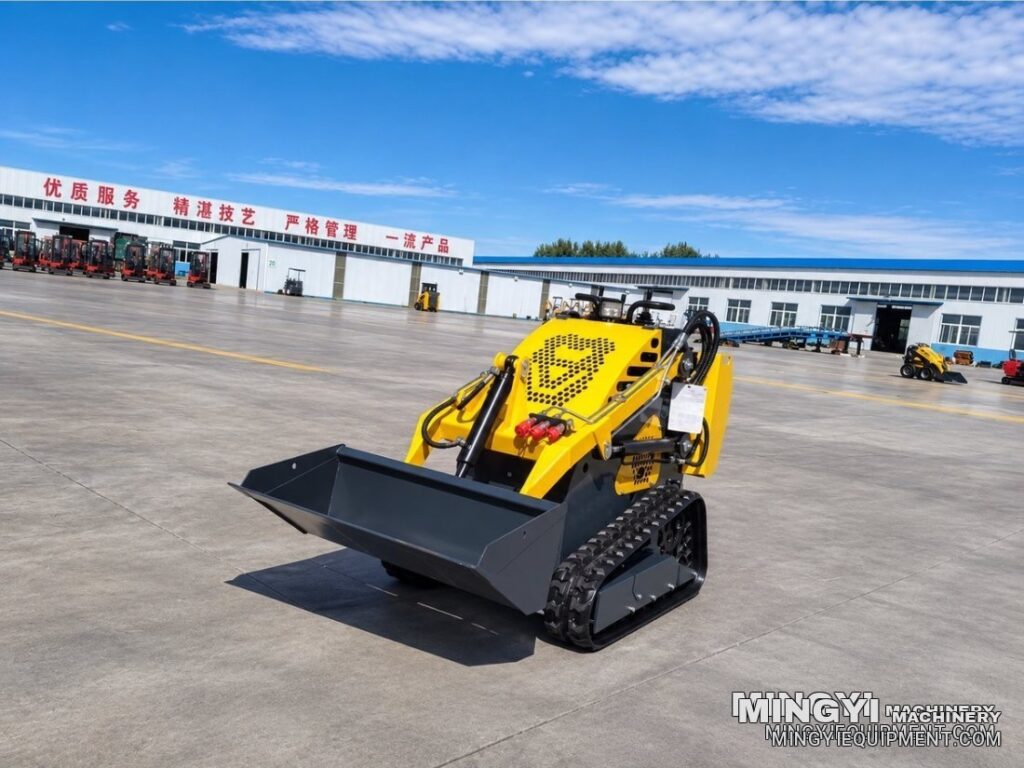
MY320 Crawler Skid Steer Loader, 200 kg Rated Load (Compact Track Loader)
Tracked skid steer loader with a 200 kg rated load and 0.06 m³ bucket, for narrow access, landscaping and yard clearing. CE certified, MOQ 1 unit, 25-35 days from our Qingdao plant.
Performance
| Operating weight | 630 kg |
|---|---|
| Bucket capacity | 0.06 m3 |
| Engine options | Runtong R420D / Briggs XR2100 / Kopu 192 / Kubota D722 |
Other
| Rated load | 200 kg |
|---|---|
| Max load | 300 kg |
The two load figures on this machine are often read as one, and they should not be. The rated load of 200 kg is the weight the loader is designed to carry repeatedly, through a full lift and travel cycle, with the machine still stable and the structure still inside its design margin. The maximum load of 300 kg is the ceiling, the figure that applies to an occasional lift on flat ground with the arms low. Confusing the two is how small loaders get damaged. A 200 kg rated machine that spends its life at 300 kg will show it first in the lift arm pins and then in the track frames. Treated as intended, with the rated figure as the working number, the same machine gives years of steady service.
Bucket capacity on this loader is 0.06 m3, and the figure only means something once the material is named. A bucket of dry sand, a bucket of wet gravel and a bucket of screened topsoil are three different loads, and the heaviest of them is the one that decides how the machine should be run. The 0.06 m3 bucket is sized to sit inside the rated load with the common materials a compact loader handles, which is why the machine is sold with it as standard rather than with a larger shell. A bigger bucket would fill faster in light material and then tempt the operator to overload it in heavy material. For a buyer, the practical question is what the machine will carry most days, and whether the standard bucket matches it.
What this machine is called in the trade
Skid-steer loaders carry more names than any other machine in this catalogue. The MY320 is a skid steer loader in the specification, a skid loader on most North American sites, a compact track loader when it runs on tracks rather than tyres, and a tracked skid steer when the buyer wants the crawler undercarriage stated plainly.
At 0.6 tonnes with 200 kg of rated load, the MY320 is bought for work a wheel loader cannot reach: tight yards, indoor and covered work, sweeping and grading with the right attachment, and hauling on soft ground where a wheeled machine digs itself in. Searches for a compact skid steer, a mini track loader or a skid steer for landscaping all describe this class of machine.
Full specification
Configuration, attachments and the complete datasheet are confirmed at quotation stage for your market.
What this layout is actually for
The MY320 is a crawler skid steer: no steering axle, no steer wheels, direction changed by driving the two track sides at different speeds. That single fact explains the rest of the machine. It turns inside its own footprint, so it works in a yard where a conventional loader needs three attempts to line up. It also means every turn scrubs the surface, which is why the undercarriage rather than the engine usually sets the service life of a machine in this class.
Where it earns its keep, and where it does not
The layout pays off where there is no room to manoeuvre: between a shed and a wall, through a garden gate the machine barely passes, on a site where the material stack sits against the excavation. It gives up travel speed and ride quality on the road, and it is not the machine to send along a finished driveway. Buyers who compare it with a compact wheel loader are usually choosing between working in tight space and moving quickly between jobs; it will not do both.
Load rating and what it means
Rated load on this build is 200 kg. Treat that as the working figure with the bucket loaded and the machine level, not as a towing or lifting capacity: a skid steer tips forward long before it runs out of hydraulic power, and the rated load already accounts for that. Carrying a pallet on forks at height reduces the usable figure, because the load centre moves forward of the bucket pins.
Working inside a footprint
The reason to own a skid steer is the ability to turn inside its own length. That changes the working method, not just the access: the machine can face the pile, load, spin and leave without reversing, which removes the need for a second person guiding it. On a tight site that is often the whole justification for the purchase.
Attachments, and why the coupler matters more than the engine
This machine runs the standard quick coupler, so the bucket, forks, grapple and sweeper all mount from the seat in a couple of minutes. In practice the attachment set decides what the machine can earn: the same chassis with a 4-in-1 bucket, pallet forks and a trencher covers work that would otherwise need three machines. Ask for the attachment list with your quote rather than buying the machine first and looking for implements afterwards.
Delivery, spares and documents
Every unit is CE certified and ships from Qingdao in 20–30 days, one unit minimum. Track rubber, the bucket edge and the filter set are the consumables that actually wear on this class, and they are common across the range. Send the working width and the surface you operate on and we will confirm the track specification before the order is fixed.
Service intervals and what they cost you
| Item | Interval |
|---|---|
| Engine oil and filter | 100 h or monthly |
| Track tension | weekly |
| Hydraulic oil filter | 500 h |
| Attachment coupler pins | grease every 50 h |
Intervals recommended for normal duty. The manual supplied with the machine governs, and dust, heat or continuous shift work shorten every one of them.
What documents travel with the machine?
The commercial invoice, the packing list, the bill of lading and the CE declaration of conformity travel with every shipment, and the operator manual goes with the machine rather than by post afterwards. If your customs broker needs a certificate of origin or a fumigation certificate, say so before the container is sealed.
Can the machine be built to my specification?
Colour, decals, bucket width, the attachment coupler and the operator station are specified at order. The undercarriage, the engine and the working envelope are not, because those define the model: asking for a different one means a different model rather than an option.
Other tracked skid steers in this range
The range also includes the MY360 tracked skid steer, MY1000 tracked skid steer and MY25 tracked skid steer. All of them are compact track loaders running the same attachment coupler.
Fitting and changeover
Will it damage a finished lawn?
A tracked machine spreads its weight over a much larger footprint than a wheeled skid steer, so it works on finished ground where wheels would rut. It is not damage-free: a sharp turn still scuffs. The practical answer is to plan turns wide, and to keep the machine off resin-bound or block paving.
What attachments fit the standard coupler?
Bucket, 4-in-1 bucket, pallet forks, grapple, sweeper and trencher all mount from the seat. In practice the attachment set decides what the machine earns: the same chassis with three implements replaces three machines, which is usually the argument that wins the purchase.
Can one trailer carry it?
These machines are sized for a plant trailer behind a suitably rated vehicle rather than a low-loader. Check the gross train weight and the trailer rating before you plan the move: the transport cost recurs on every job, the purchase price is paid once.
Custom builds, OEM and private label
The MY320 is a catalogue build, not a fixed one: every unit is made to order, so the specification is agreed before steel is cut rather than adjusted after delivery.
On a skid-steer that usually means the attachment interface, tyre type, canopy or sealed cab with heater, auxiliary hydraulic flow, paint colour, decal set, and the language on the plate and in the manual.
- Attachments: standard skid-steer quick attach, or pin-on
- Tyres: pneumatic, solid, or over-tyre tracks
- Cab: canopy or sealed cab with heater
- Branding: your nameplate, your decals, your manual
We also build under our customers’ own brands. Private label means your nameplate, your decals, your manual and your packaging, with the machine otherwise identical to the catalogue build; the MINGYI plate stays available if you would rather sell it as ours. Drawings and first-article photographs are approved before production starts, and a batch order is held to one specification so the second container matches the first. One unit is enough to begin. Send us the working condition and the brand you sell under and we will quote the build.
Ask about this machine
Related models
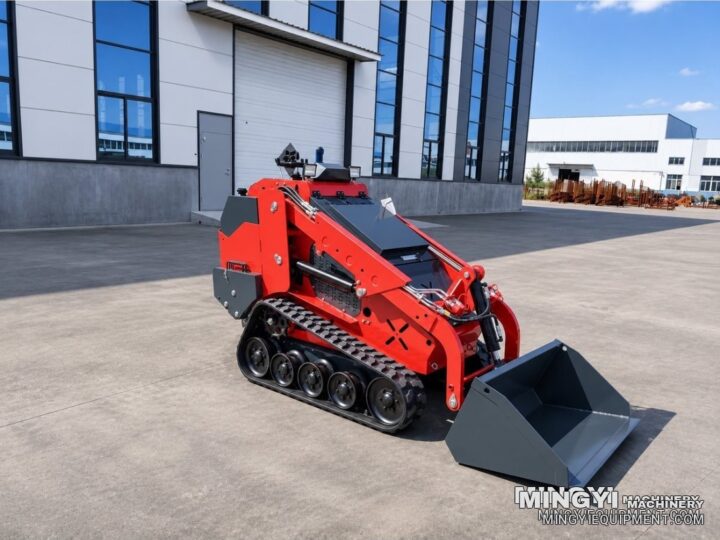
MY1000 Tracked Skid Steer Loader, 300 kg Rated Load (Compact Track Loader)
- Power 18.4 kW (25 hp)
- Rated engine speed 3,600 rpm
- Emission standard EU Stage V / EPA Tier 4 Final
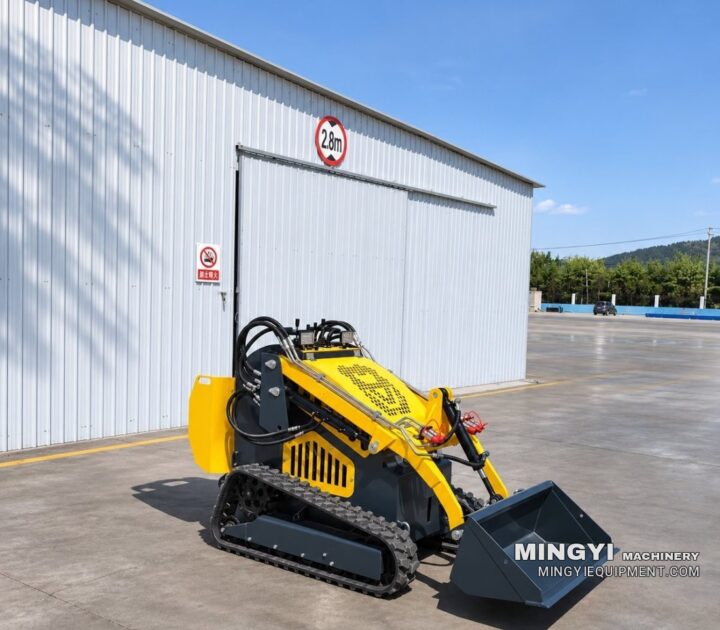
MY360 Crawler Skid Steer Loader (Compact Track Loader)
- Hydraulic system Twin-pump, three-valve
- Engine Runtong R740 (standard)
- Configurations Stand-on crawler / stand-on wheeled
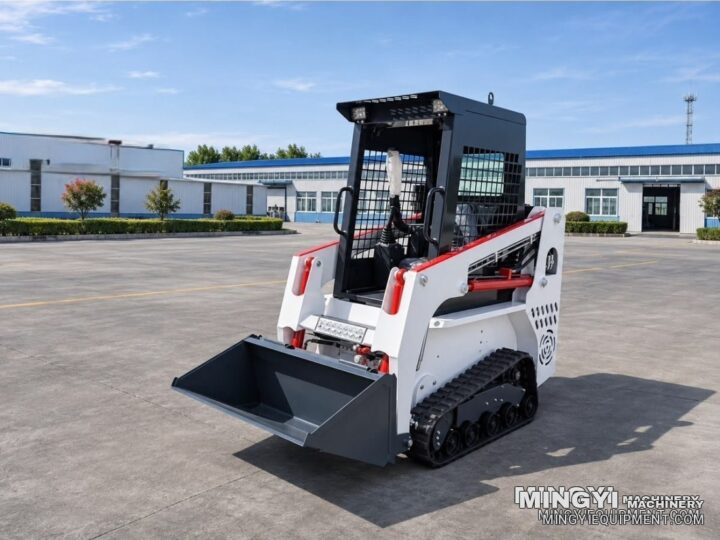
MY25 Crawler Skid Steer Loader (Compact Track Loader)
- Control Pilot joystick operation
- Engine Runtong R999 (standard)
- Drive Four wheel-motor travel drive